

To protect your baby from the sun while in a stroller, fully extend the canopy and consider using additional shade accessories. Dress your baby in lightweight, long-sleeved clothing and a wide-brimmed hat. Schedule outings early or late to avoid peak sun hours, and keep an eye on your baby’s temperature. Stay vigilant for signs of overheating and guarantee hydration is a priority. There’s more to learn about practical strategies for keeping your little one safe and cool.
Understanding the Importance of Sun Protection for Babies
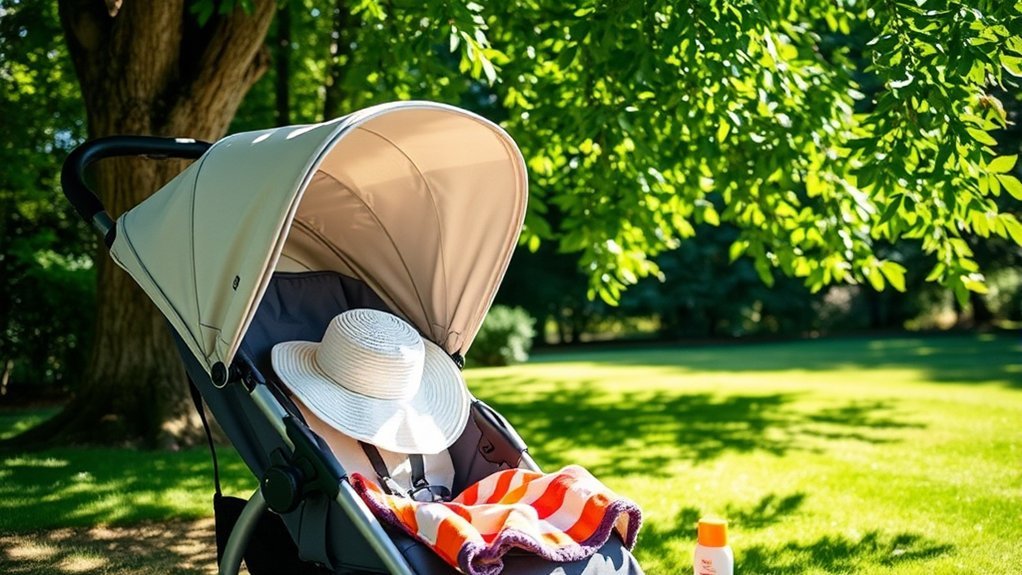
When you think about sun protection for your baby, remember that their skin is much more delicate than yours. Baby skin is 20-30% thinner, making it more susceptible to harmful UV rays. This increased UV sensitivity raises the risk of sunburn and long-term skin damage, including a higher chance of developing melanoma later in life.
For infants under six months, avoiding direct sun exposure is essential, as their skin can’t handle UV radiation effectively. Even on cloudy days, up to 80% of UV rays can still reach them.
Establishing sun safety habits early, like dressing your baby in protective clothing and seeking shade, can greatly reduce their risk of skin issues. Prioritize their safety to enjoy carefree outings together.
Recognizing Signs of Heat-Related Distress
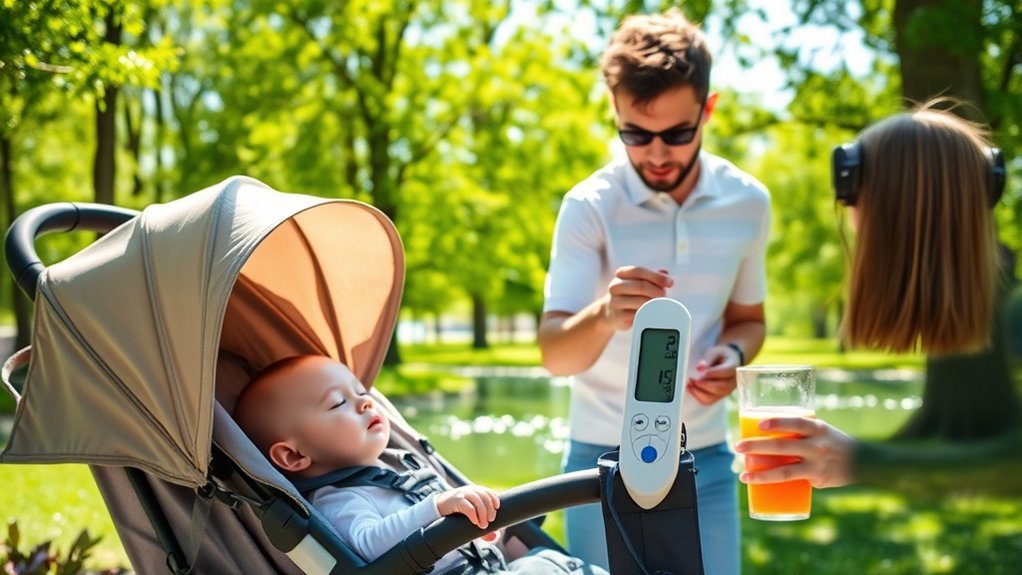
How can you tell if your baby is suffering from heat-related distress? Watch for signs like confusion, dry lips, and excessive sweating.
If your little one seems fatigued or experiences nausea and vomiting, these could be dehydration symptoms indicating heat exhaustion. Babies often can’t express discomfort, so it’s vital to stay vigilant.
If you notice dry skin or decreased urination, they might be dehydrated. Move your child to a cooler area immediately and offer fluids to rehydrate.
If symptoms worsen, like fainting or persistent vomiting, seek medical attention right away.
Optimizing Stroller Use for Shade and Airflow
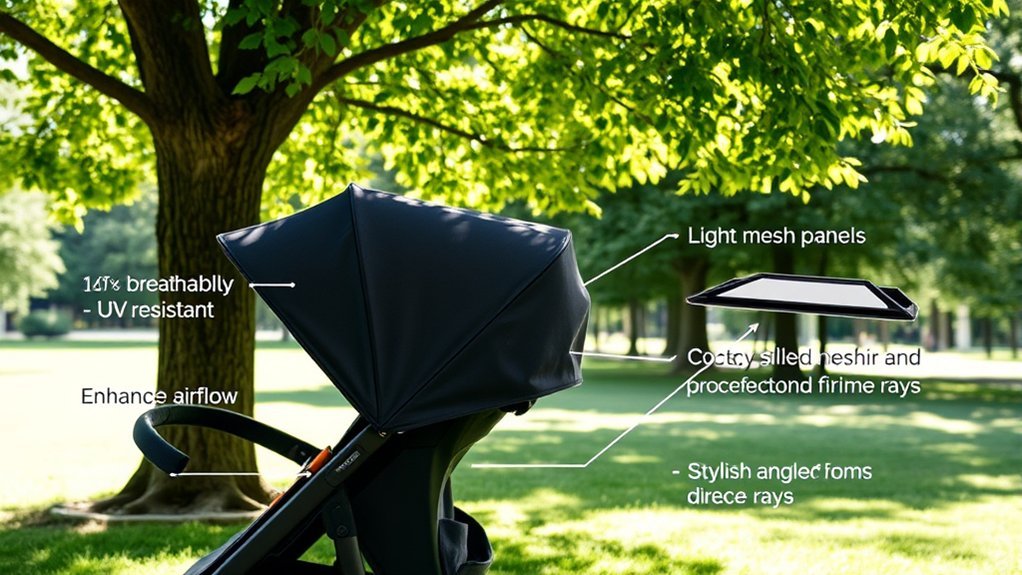
To keep your baby comfortable during stroller outings, it’s essential to optimize shade and airflow. Use the stroller’s canopy fully extended to block direct sunlight. Avoid parking in direct sunlight, as it can lead to heat buildup. Instead, consider these practical tips:
| Shade Accessories | Airflow Enhancements | Best Practices |
|---|---|---|
| Canopy | Stroller fans | Schedule outings early or late |
| Umbrella attachment | Mesh fabric covers | Park in shaded areas |
| Sunshade clips | Ventilated seats | Monitor temperature |
Choose stroller accessories that promote airflow instead of trapping heat. Securely fasten fans to guarantee safe air circulation, keeping your child cool and comfortable on your adventures.
Ideal Times for Stroller Outings
Choosing the right times for stroller outings can greatly enhance your baby’s comfort and safety.
Selecting optimal times for stroller walks significantly boosts your baby’s comfort and safety.
To optimize your stroller timing and minimize sun exposure, follow these guidelines:
- Early Morning or Late Afternoon: Schedule strolls before 11 AM or after 3 PM to avoid peak sun exposure.
- Monitor Temperatures: Limit outings on hot days with high heat indices to prevent heat distress in your child.
- Seek Shade: Use natural shade from trees or bring portable umbrellas to keep your baby cool.
- Take Breaks: Pause frequently in cool areas to maintain comfort and prevent overheating.
Selecting the Right Stroller for Summer
When selecting the right stroller for summer, it’s important to prioritize features that enhance sun protection and comfort for your baby.
Look for a stroller with a UPF-rated canopy that provides effective sun shielding while allowing air circulation. Opt for lighter-colored stroller seats in summer colors to minimize heat absorption, ensuring a cooler ride during those sunny outings.
Adequate ventilation is vital, so choose strollers designed to keep your child comfortable without trapping heat. Always check the temperature of the stroller seat before placing your baby in it, as dark fabrics can become uncomfortably hot.
Additionally, adjustable canopies or extensions can maximize shade coverage, especially during peak sun hours, making your summer adventures more enjoyable.
Essential Sun-Protective Clothing for Infants
When dressing your infant for outdoor activities, choose lightweight, long-sleeved clothing made from tightly woven fabrics to shield their delicate skin from UV rays.
Don’t forget a wide-brimmed hat with a secure fit to protect their face, ears, and neck.
Also, look for UPF-rated clothing with a rating of 30 or higher to guarantee maximum sun protection.
Lightweight Long-Sleeved Fabrics
While you might think sunscreen alone is enough for sun protection, dressing your infant in lightweight long-sleeved fabrics is vital for shielding their delicate skin from harmful UV rays.
Here are some tips to take into account:
- Choose breathable materials: Opt for fabrics that allow air circulation to keep your little one cool.
- Look for UPF-rated options: Select tightly woven fabrics with a UPF rating of 30 or higher to block at least 97% of UV radiation.
- Reflect on fabric colors: While darker colors absorb more rays, the weave density is more important for protection.
- Dress for comfort: Long-sleeved shirts and pants help regulate body temperature while providing necessary sun protection.
Equip your infant with the right clothing and enjoy outdoor adventures worry-free!
Effective Hats for Coverage
Dressing your infant in sun-protective clothing is just one part of safeguarding their skin from UV rays. Effective hat styles are vital, especially wide-brimmed options with at least a 4-inch brim. These provide essential shade for your baby’s face, ears, and neck.
Opt for hats made from tightly woven, lightweight fabrics instead of loose-weave materials to guarantee adequate protection without overheating. Look for hats with chin straps to keep them securely in place during outdoor adventures. Additionally, choosing hats with UPF ratings of 30 or higher can greatly enhance sun protection.
UV Protection Rating Importance
Understanding the importance of UV protection ratings is essential for effectively safeguarding your infant’s delicate skin from harmful sun exposure.
To help you make informed fabric choices, consider the following:
- UPF 50+ Fabrics: Choose clothing with UPF ratings that block 98% of UV rays for superior protection.
- Long-Sleeved Options: Dress your infant in long-sleeved shirts and pants made from tightly woven fabrics for better coverage.
- Color Matters: While darker fabrics can absorb UV rays, focus on the weave density—light-colored, tightly woven options can be highly effective.
- Wide-Brimmed Hats: Select hats with at least a 4-inch brim to shield your child’s face, ears, and neck from direct sun exposure.
The Role of Sunscreen for Babies Over Six Months
As summer approaches, ensuring your baby is protected from harmful UV rays becomes vital, especially for those over six months old.
For effective sun protection, use a broad-spectrum, mineral sunscreen with SPF 30 or higher. Apply it to exposed skin about 30 minutes before heading outside, allowing time for proper absorption. Remember to reapply every two hours, or more frequently if your baby is sweating or swimming.
Alongside sunscreen application, dress your little one in lightweight, long-sleeved clothing and keep them shaded whenever possible.
Choosing a mineral sunscreen containing zinc oxide or titanium dioxide is essential, as these are gentler on your baby’s sensitive skin compared to chemical options.
Opt for mineral sunscreens with zinc oxide or titanium dioxide for safer protection on your baby’s delicate skin.
Prioritize this routine for a safer, enjoyable summer!
Additional Precautions for Keeping Your Baby Cool
To keep your baby cool during stroller outings, hydration is essential, so make certain to offer water if they’re over six months.
Monitor the temperature and dress your little one in lightweight, breathable fabrics that help wick moisture away from their skin.
Taking breaks in shaded areas can also prevent overheating and guarantee a more comfortable experience.
Hydration Is Key
Keeping your baby hydrated is essential, especially during warm weather. Here are some effective hydration tips to guarantee your little one stays cool and comfortable:
- Infants under six months: Offer breast milk or formula frequently to maintain hydration.
- Children over six months: Provide regular access to water and hydrating liquids during outdoor activities.
- Monitor fluid signs: Watch for fussiness, hot skin, or rapid breathing, which may indicate dehydration.
- Prepare for cool-downs: Always have a damp cloth or access to air conditioning ready if you notice signs of heat distress.
Monitor Baby’s Temperature
Regularly monitoring your baby’s temperature is essential to confirm they stay comfortable and safe in warm weather. Conduct temperature checks by feeling their neck or abdomen; babies struggle with body regulation and can easily overheat.
Look out for signs like fussiness, a hot belly or neck, flushed skin, and rapid breathing—these indicate it’s time to cool your baby down. If you suspect overheating, move them to a cooler area, remove excess clothing layers, and apply cool compresses.
Always be aware of outdoor temperatures and limit stroller use during peak heat hours. Verify frequent breaks indoors to maintain a comfortable environment for your baby, keeping hydration in mind if they’re over six months.
Dress for Comfort
While enjoying time outdoors, dressing your baby appropriately can make a significant difference in their comfort and safety. Here are some tips for effective fabric choices and color considerations:
- Lightweight, long-sleeved clothing: Opt for tightly woven fabrics that provide a barrier against UV rays while keeping your baby cool.
- Light-colored attire: Choose light colors that reflect sunlight, preventing overheating compared to darker shades.
- Wide-brimmed hats: Select hats that shield the face, ears, and neck, ensuring they fit securely with chin straps.
- Breathable fabrics: Use cotton or UPF-rated materials to enhance airflow and moisture-wicking properties, helping regulate body temperature.
Monitor your baby’s temperature and adjust layers as needed to keep them comfortable.
Cooling Strategies for Overheated Babies
How can you guarantee your baby stays cool during hot outings? Start by monitoring their temperature and watch for signs of heat exhaustion like fussiness or flushed skin.
Monitor your baby’s temperature and watch for signs of heat exhaustion like fussiness or flushed skin during hot outings.
Utilize your stroller’s canopy for shade, and avoid placing it in direct sunlight to prevent heat buildup. Ascertain proper stroller ventilation by using fans or adjusting the canopy for airflow.
Dress your baby in lightweight, breathable clothing, and remove layers if they seem warm. Hydration is key, so offer frequent liquids.
If your baby shows distress, move them to a cooler area immediately, apply cool compresses, and seek medical attention if symptoms don’t improve.
Keeping these strategies in mind will help guarantee your baby stays comfortable and safe.
Establishing Healthy Sun Safety Habits Early
Establishing consistent sun protection habits early is essential for your child’s long-term health.
By modeling safe sun practices, like applying sunscreen and wearing protective clothing, you can instill these important habits from a young age.
This proactive approach not only safeguards their skin now but also sets the foundation for responsible sun safety in adulthood.
Importance of Consistent Protection
Consistent sun protection is essential for your child’s long-term skin health, especially since their delicate skin is more susceptible to UV damage.
Establishing healthy habits early can make a significant difference. Here are four key practices to implement:
- Use Shade: Always seek shaded areas when outdoors to minimize sun exposure.
- Protective Clothing: Dress your child in lightweight, long-sleeved clothing that covers their skin.
- Sunscreen Application: Apply broad-spectrum sunscreen with at least SPF 30, even on cloudy days.
- Educate on UV Awareness: Teach your child about the sun’s risks, fostering a proactive attitude towards sun safety.
Modeling Safe Sun Practices
While you enjoy outdoor activities with your child, modeling safe sun practices can greatly influence their understanding of sun safety. By using shade, protective clothing, and sunscreen, you set a strong example. Daily routines teach children the importance of being SunSmart, reinforcing positive behaviors.
Here’s a quick guide to effective sun protection methods:
| Sun Protection Method | Description |
|---|---|
| Shade | Seek shelter under trees or umbrellas. |
| Clothing | Choose long sleeves and UV-protective fabrics. |
| Hats | Wear wide-brimmed hats for face coverage. |
| Sunglasses | Use UV-blocking sunglasses to protect eyes. |
Engage your child in selecting outfits and applying sunscreen. This interaction not only makes sun safety fun but also fosters their independence in recognizing when precautions are necessary.
Frequently Asked Questions
Can I Use a Stroller Sunshade With a Car Seat Adapter?
Yes, you can use a stroller sunshade with a car seat adapter, but make certain it’s stroller compatible. Check the sunshade’s effectiveness in blocking UV rays to protect your little one while you’re on the go.
What Materials Are Best for Sun-Protective Baby Clothing?
For sun-protective baby clothing, choose breathable fabrics like cotton or bamboo that offer UV protection. These materials keep your baby comfortable while shielding them from harmful rays, ensuring they’re safe during outdoor adventures.
How Often Should I Check My Baby for Overheating in the Stroller?
You should check your baby for overheating every 30 minutes. Look for overheating signs like flushed skin or excessive sweating. Make certain your stroller has good ventilation to keep your little one comfortable and cool.
Can I Use a Regular Umbrella for Stroller Sun Protection?
You can use a regular umbrella for stroller sun protection, but be cautious about umbrella stability. Consider sunshade alternatives specifically designed for strollers to guarantee better coverage and safety for your baby during sunny outings.
What Are Safe Sun Exposure Limits for Infants Under Six Months?
You’ll want to avoid direct sunlight for infants under six months; their delicate skin can’t handle it. Follow sun exposure guidelines closely for ideal infant skin care, ensuring your little one stays safe and comfortable.
Conclusion
As you venture out with your baby, think of sun protection as a sturdy umbrella shielding them from harmful rays. Just like you wouldn’t walk in a storm without cover, don’t skip these essential precautions. By choosing the right stroller, timing your outings, and using sunscreen, you guarantee your little one stays safe and cool. Remember, creating healthy sun safety habits now will set the stage for a lifetime of outdoor enjoyment without the worry of sunburn or heat distress.


