To prevent stroller wrist pain, adjust the handle height so your wrists remain straight and elbows bend at a right angle. Use ergonomic designs and padded grips to enhance comfort. Regularly take breaks to check your posture and relax your grip. Incorporate wrist stretches and forearm strengthening exercises into your routine to improve flexibility and endurance. By following these tips, you’ll enjoy smoother outings with less discomfort. Explore further strategies to enhance your stroller experience.
Understanding the Causes of Stroller Wrist Pain
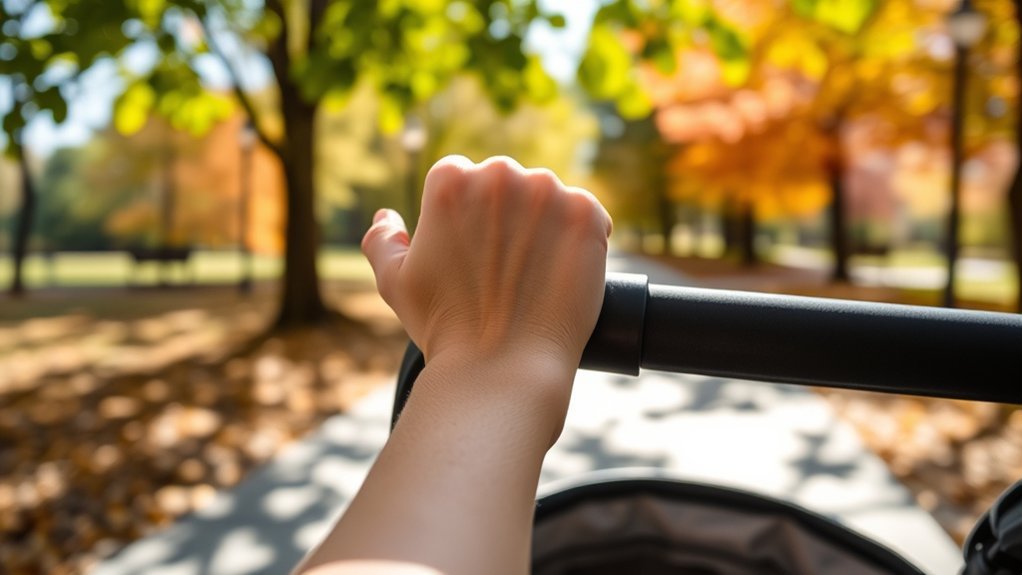
Understanding the causes of stroller wrist pain is vital for preventing discomfort during use. Poor handle design and improper height adjustments can strain your wrist anatomy, leading to pain.
Maintaining a neutral wrist position while pushing is essential; excessive flexion or extension can worsen discomfort. Research shows that adjustable stroller handles greatly reduce upper-limb strain by accommodating caregivers of different heights, promoting proper posture.
Maintaining a neutral wrist position while pushing a stroller is crucial to avoid discomfort and promote proper posture.
Lightweight strollers with ergonomic design and effective braking systems minimize grip tension, further alleviating wrist pain.
Regularly inspecting and maintaining stroller components, including handles and straps, prevents wear-related injuries, enhancing overall comfort.
Importance of Proper Grip and Posture
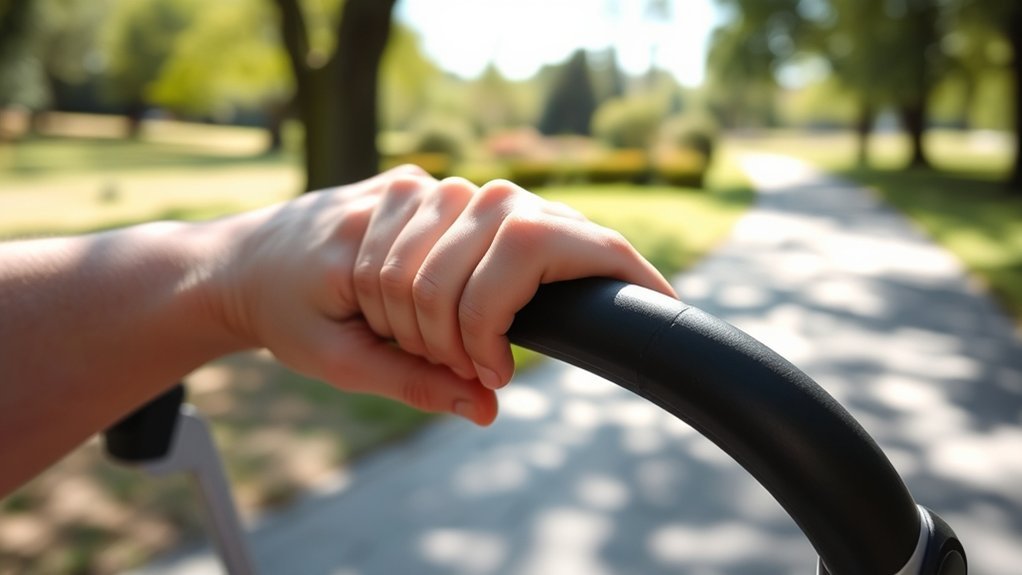
Maintaining a neutral wrist position while pushing the stroller is essential to avoid strain.
You should also guarantee your elbows are at a right angle, which promotes better alignment and reduces tension.
Finally, a comfortable handle grip can greatly enhance your pushing experience and minimize the risk of wrist pain.
Neutral Wrist Position
To prevent wrist strain while pushing a stroller, it’s crucial to keep your wrists in a neutral position, as this alignment minimizes discomfort and reduces the risk of repetitive strain injuries.
A proper grip involves straight wrists aligned with your forearms, which can be achieved by adjusting the stroller handle height to match your stature. Many stroller designs include telescoping handles, allowing you to find the ideal height easily.
This ergonomic feature guarantees that your elbows remain close to a right angle, reducing shoulder tension and promoting a relaxed posture.
Research shows that using a stroller with thoughtful handle design and ergonomic grip can notably decrease upper-limb strain, ultimately enhancing your pushing experience and comfort.
Elbow Angle Alignment
Proper elbow angle alignment plays an essential role in guaranteeing comfort and preventing strain while pushing a stroller. Maintaining an ideal elbow angle near a right angle allows your elbow joint to function effectively, reducing tension and promoting better posture.
Follow these tips for proper alignment:
- Adjust handle height: Confirm the stroller handle is at a height that keeps your forearms level.
- Keep wrists neutral: Avoid flexion or extension to minimize risk of repetitive strain injuries.
- Relax your shoulders: Maintain a relaxed shoulder posture to alleviate discomfort during use.
Regularly checking your grip and handle height will enhance your experience, liberating you from unnecessary strain and allowing you to enjoy your time with your child fully.
Comfortable Handle Grip
A comfortable handle grip is essential for preventing wrist pain and ensuring an enjoyable experience while pushing a stroller. Focus on handle materials and ergonomic designs that promote a neutral wrist position, reducing strain.
Look for telescoping handles that allow you to adjust the height, so you can push without bending or straining excessively. Larger tires and true suspension systems enhance ride quality, minimizing vibrations that can lead to discomfort in your hands and wrists.
Additionally, choose strollers with effective braking systems requiring minimal grip tension, which allows for better control and less risk of wrist strain on inclines or declines.
Tips for Adjusting Stroller Handle Height
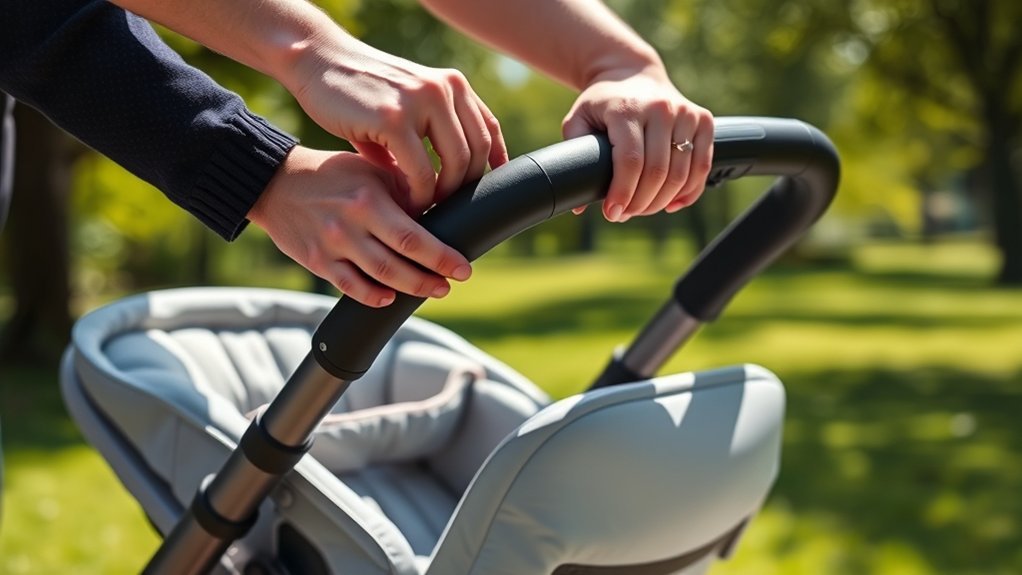
Adjusting the stroller handle height is essential for maintaining a comfortable and safe pushing experience. Proper handle height not only enhances caregiver comfort but also prevents wrist strain.
Follow these tips to guarantee ideal adjustments:
- Find Your Neutral Position: Adjust the handle so your wrists remain straight, promoting a natural grip and reducing discomfort.
- Check Elbow Angle: Aim for your elbows to bend at a right angle while pushing, which alleviates shoulder tension and improves posture.
- Utilize Telescoping Handles: If available, use telescoping handles to accommodate various heights, allowing everyone to push comfortably.
Regularly checking the handle height can greatly enhance your stroller experience, ensuring you remain liberated and pain-free during outings.
Strengthening Exercises for Wrists and Forearms
To prevent wrist pain while pushing a stroller, incorporating wrist flexor stretches can greatly improve flexibility and reduce strain.
Additionally, engaging in forearm strengthening exercises enhances muscle endurance, making it easier to manage the weight and maneuverability of the stroller.
Wrist Flexor Stretch
When you’re pushing a stroller, it’s easy to overlook the strain on your wrists, but incorporating wrist flexor stretches can greatly enhance your comfort and mobility.
These stretches not only improve wrist mobility but also promote forearm relaxation, helping you feel liberated from discomfort.
Here’s how to perform a wrist flexor stretch:
- Extend one arm in front of you with the palm facing upward.
- Gently pull back on the fingers with your opposite hand.
- Hold the stretch for 15-30 seconds.
Aim to practice this stretch 2-3 times a week to alleviate tension, improve flexibility, and prevent overuse injuries.
Forearm Strengthening Exercises
Strengthening your forearms is essential for reducing wrist pain and enhancing your overall stroller experience. Incorporating exercises like wrist curls and reverse wrist curls can markedly improve forearm endurance, allowing you to maintain better control while pushing your stroller.
Additionally, using resistance bands for forearm pronation and supination targets specific muscles, promoting grip stability and wrist function. Engaging in farmer’s walks or carrying weights builds overall forearm strength, which is vital for managing the stroller’s weight effectively.
Consistent practice of these exercises leads to improved stamina and reduced discomfort, making your stroller outings more enjoyable. By prioritizing forearm strengthening, you empower yourself to navigate your caregiver duties with greater ease and comfort.
Stretching Techniques to Improve Flexibility
Incorporating regular stretching techniques into your routine can greatly enhance wrist flexibility, which is essential for preventing pain while pushing a stroller.
By focusing on dynamic stretches, you can release significant flexibility benefits. Here are three effective techniques to evaluate:
- Wrist Circles: Rotate your wrists in both directions for 30 seconds to improve mobility.
- Finger Flexes: Open and close your fists tightly to stretch and strengthen your fingers.
- Forearm Stretches: Extend one arm, palm up, and gently pull back on your fingers with your other hand.
Consistent practice of these stretches not only reduces tension but also enhances grip strength and endurance, making stroller pushing a more comfortable experience.
Embrace these techniques for a liberating, pain-free journey.
Choosing the Right Stroller for Wrist Comfort
Choosing the right stroller can greatly impact your wrist comfort during daily outings. Look for strollers with adjustable telescoping handles, allowing you to customize the height for ideal wrist positioning. This simple handle adjustment can greatly reduce strain while you’re on the move.
Additionally, prioritize stroller designs with comfortable grip features—thicker bars made from high-quality materials can enhance hand comfort and decrease wrist fatigue. Strollers equipped with larger wheels and genuine suspension systems provide a smoother push, minimizing vibrations and rolling resistance.
If you enjoy jogging, consider strollers specifically designed with fixed front wheels and effective braking systems to maintain control and reduce wrist tension.
Finally, lightweight models are easier to maneuver, helping lessen the physical demand on your wrists.
Utilizing Padded Grips and Accessories
While maneuvering daily errands with a stroller, utilizing padded grips and accessories can make a noticeable difference in your comfort level.
Here are three key benefits to take into account:
- Reduced Pressure: Padded grips can considerably lessen pressure on your hands and wrists, making long walks more enjoyable.
- Ergonomic Design: Handles that conform to your hand’s natural shape help maintain a neutral wrist position, minimizing strain and risk of injury.
- Vibration Absorption: Accessories like handlebar wraps made from high-quality foam or gel enhance grip comfort and absorb vibrations, further alleviating wrist pain.
Choosing the right padded grips and handlebar wraps can transform your stroller experience, promoting better posture and overall wrist health.
Regular maintenance guarantees these accessories remain effective in preventing discomfort.
Best Practices for Long Outings With a Stroller
To enjoy long outings with a stroller without experiencing wrist pain, it’s important to adopt best practices that support your comfort and safety.
Start by adjusting the stroller handle to the correct height, ensuring a neutral wrist position. Use the wrist strap consistently to prevent the stroller from rolling away, especially on slopes. Engage the brakes whenever the stroller is stationary, particularly in crowded areas, to avoid awkward wrist positions.
Incorporate regular breaks during your outing to check your posture and relax your grip. Finally, choose a stroller with ergonomic design and larger tires to enhance maneuverability, making it easier to push and reducing the risk of wrist discomfort.
Consider additional stroller accessories that promote comfort.
When to Seek Professional Help for Wrist Pain
If you’re dealing with persistent wrist pain after using a stroller, it’s essential to recognize when it’s time to seek professional help.
Here are three key indicators for a necessary professional evaluation:
- Symptoms like numbness or tingling: These may signal serious conditions, such as carpal tunnel syndrome.
- Limited range of motion: If your wrist pain hinders daily activities or follows specific tasks, it’s critical to consult a healthcare provider.
- Visible swelling or bruising: Such symptoms could indicate fractures or injuries requiring medical intervention.
Don’t ignore your body’s signals.
Listening to your body is crucial; don’t overlook the signs it’s sending you.
Addressing wrist pain early with a professional assessment can lead to effective treatment and recovery, freeing you to enjoy your outings without discomfort.
Frequently Asked Questions
How Can I Tell if My Stroller Is Too Heavy?
If your stroller’s weight hinders maneuverability, it’s likely too heavy. Struggling to push, turn, or lift it indicates excess weight. Evaluate how easily you can navigate corners and uneven terrain for ideal performance.
What Are the Signs of Early Wrist Strain?
Think of your wrist as a finely tuned instrument; when you feel pain symptoms like tenderness, stiffness, or a dull ache, it’s signaling early wrist strain. Listen to it, and adjust your activities accordingly.
Can Wrist Pain Affect My Ability to Push a Stroller?
Yes, wrist pain can hinder your ability to push a stroller effectively. Prioritizing stroller ergonomics and implementing pain management strategies can help maintain comfort and functionality, allowing you to navigate confidently without discomfort or limitations.
Are There Specific Strollers Recommended for Wrist Pain Relief?
If you’re seeking relief, consider lightweight strollers with ergonomic designs. Like a feather guiding a breeze, these options ease your burden, letting you navigate smoothly without straining your wrists. Comfort and freedom await!
How Often Should I Take Breaks While Using a Stroller?
You should take breaks every 15 to 30 minutes while using a stroller. This helps reduce strain. Focus on a proper pushing technique, alternating hands, to enhance comfort and minimize wrist discomfort during your stroll.
Conclusion
In conclusion, safeguarding your wrists while strolling is essential for a pain-free parenting experience. By prioritizing posture, practicing proper gripping techniques, and choosing comfortable strollers, you can prevent persistent pain. Incorporate strengthening and stretching exercises into your routine to enhance flexibility and fortitude. Remember, a little preparation can lead to smoother strolls and sweeter moments with your little one. If discomfort continues, don’t hesitate to seek professional advice to guarantee your wrists stay healthy and happy.