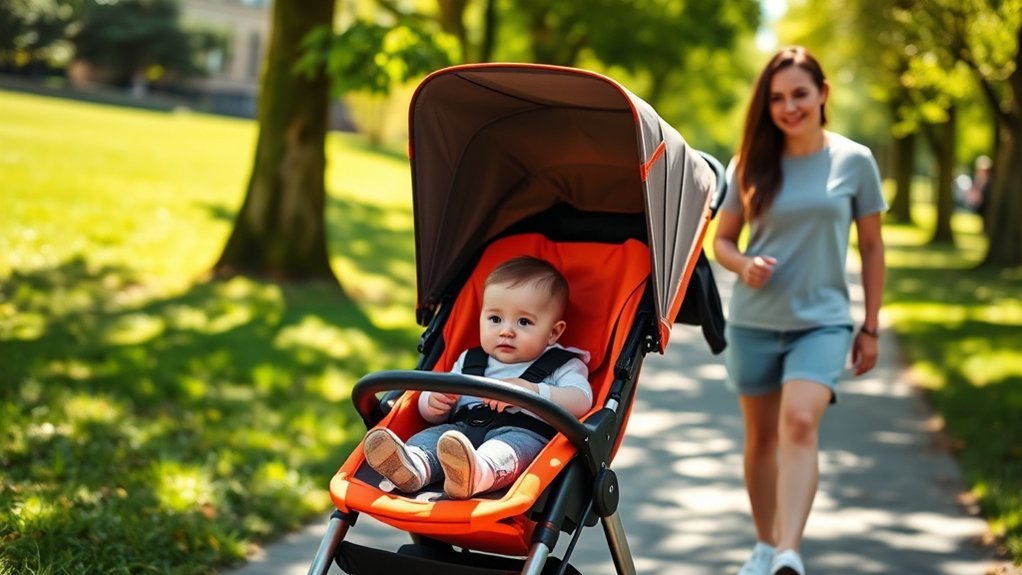
Your baby can start using an umbrella stroller around six months old, provided they can sit up unassisted. It’s crucial to guarantee they have good head and neck control and meet the weight guidelines, usually between 40 to 50 pounds. Always follow safety guidelines, like avoiding tipping by not overloading the handlebars. Shifting from an umbrella stroller may occur between ages three to five. Discover more about signs of readiness and safety tips.
What Is an Umbrella Stroller?
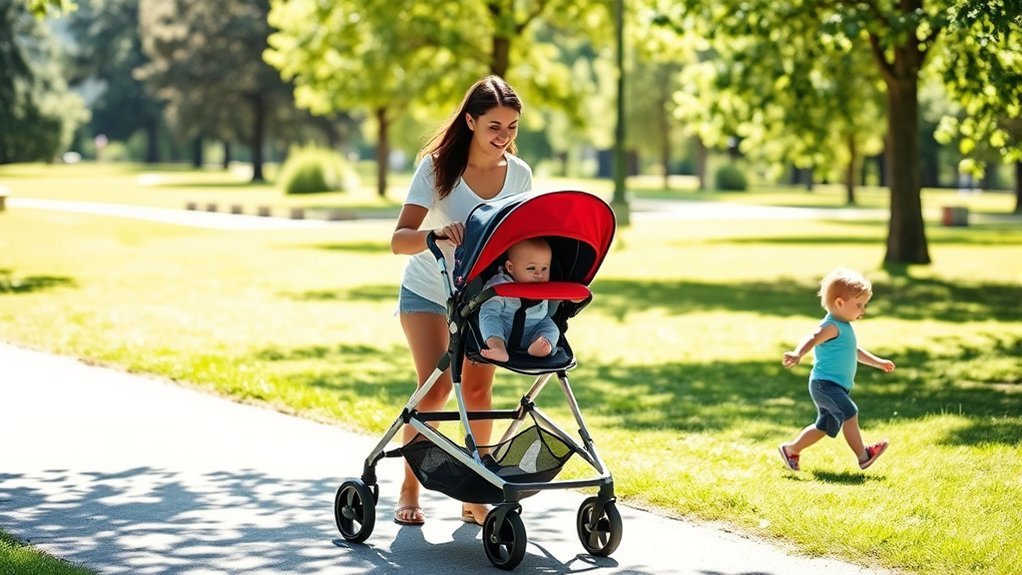
An umbrella stroller is a practical solution for parents on the go, designed to be lightweight and easily portable. This stroller type features a simple, umbrella-style folding mechanism, allowing you to navigate crowded places and public transport with ease.
While it prioritizes travel convenience, it typically includes basic features like a minimal canopy and a fabric seat, sacrificing extensive amenities for portability. Ideal for children who can sit upright unassisted, these strollers accommodate weight limits between 40 to 50 pounds.
For parents seeking an affordable and efficient way to transport their little ones, an umbrella stroller offers a liberating blend of mobility and simplicity without compromising safety. Just verify your child meets the necessary developmental milestones before use.
What Age Is Suitable for a Child to Use an Umbrella Stroller?

When considering an umbrella stroller for your child, focus on their developmental milestones rather than just their age.
Typically, children are ready around six months, once they can sit up unassisted, but some may need a bit more time.
Also, verify your child meets the manufacturer’s weight guidelines to guarantee safe and comfortable use.
Developmental Milestones Required
Before introducing your baby to an umbrella stroller, it’s important to confirm they’ve reached vital developmental milestones. Typically, this occurs around six months, when your child develops the muscle strength necessary to sit upright unassisted.
Look for signs of developmental readiness, such as good head and neck control, which usually emerges between five to eight months. Make sure your little one can sit independently and remains still and comfortable during use. These factors are significant for a safe experience in an umbrella stroller.
Manufacturer Weight Guidelines
Most umbrella strollers are designed for kids who are at least six months old, as this age typically aligns with their ability to sit upright unassisted.
It’s vital to pay attention to manufacturer specifications, including weight limits that usually range from 40 to 50 pounds. These limits guarantee safety and stability as your child grows.
Keep in mind that most kids will shift out of umbrella strollers between ages 3 to 5, depending on their individual growth rates.
Always prioritize your child’s ability to sit still and maintain head and neck control when deciding on stroller use.
Adhering to these guidelines is fundamental for your child’s comfort and safety while enjoying the freedom of movement an umbrella stroller provides.
Signs a Child Is Ready to Use an Umbrella Stroller
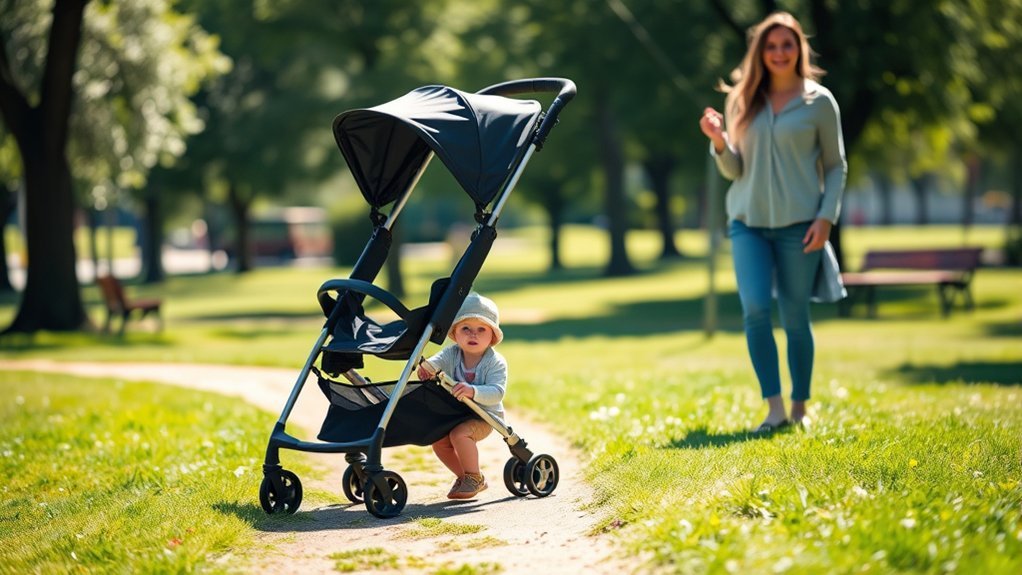
As your baby approaches six months, you’ll want to look for specific signs that indicate they’re ready to use an umbrella stroller. These signs reflect their developmental readiness and help guarantee stroller safety:
- They can sit up unassisted without support.
- Head and neck control is strong, allowing for a stable position.
- They can remain still for extended periods, indicating comfort.
- They meet the weight guidelines, typically ranging from 40 to 50 pounds.
Monitoring these milestones is essential. If your child displays these traits, they’re likely ready for an umbrella stroller.
However, always prioritize their comfort and safety, as limited recline positions can be a challenge for younger infants. Stay observant and prepared to adjust as needed.
What to Look for When Shopping for Umbrella Strollers
When you’re shopping for an umbrella stroller, it’s essential to focus on key features that prioritize safety and comfort.
Make sure the model complies with safety standards and offers convenience factors like a lightweight design and easy folding mechanism.
Key Features to Consider
Choosing the right umbrella stroller involves careful consideration of several key features to guarantee it meets your family’s needs.
Prioritizing these elements can enhance your outings:
- Multiple recline positions for your child’s comfort during naps or explorations.
- Quick foldability to easily collapse the stroller with one hand while juggling other tasks.
- Lightweight and compact design for effortless storage in small spaces or vehicles.
- Easy-clean fabrics, such as removable or machine-washable options, for maintaining hygiene with minimal effort.
Safety Standards Compliance
Before making a purchase, it’s essential to guarantee the umbrella stroller you’re considering complies with important safety standards.
Look for safety certifications from organizations like the American Academy of Pediatrics (AAP) and the Juvenile Products Manufacturers Association (JPMA). A five-point harness system is critical for keeping your child securely in place, while stability tests confirm the stroller won’t tip over when loading items.
Check that the materials are free from harmful chemicals and meet flammability standards for your child’s safety. Always consult the manufacturer’s guidelines regarding weight limits and age appropriateness to make sure the stroller suits your child’s developmental stage.
Prioritizing these compliance standards lays the foundation for a safe, liberating experience for you and your little one.
Comfort and Convenience Factors
Finding the right umbrella stroller involves considering several comfort and convenience factors that can greatly enhance your experience.
Focus on these essential features:
- Multiple recline positions for your child’s comfort during rides.
- Quick foldability, making it easy to stow away when you’re on the go.
- Compact size for easy storage in tight spaces, perfect for urban living.
- Easy-clean features, like removable or machine-washable fabrics, to keep things hygienic.
What Age Should You Stop Using an Umbrella Stroller?
When should you consider retiring your child’s umbrella stroller? Typically, it’s time to make the switch when your little one reaches the weight limit, usually between 40 to 50 pounds, often around ages 3 to 5.
Monitoring your child’s weight is vital, as you’ll want to shift to stroller alternatives that encourage child independence. Experts recommend moving away from strollers by age 3 to promote active lifestyles and walking.
While there’s no strict age limit, fostering your child’s independence is fundamental. Embrace this opportunity for growth and exploration, empowering your child to navigate the world on their own two feet as they develop confidence and motor skills.
Changing now will pave the way for their future adventures.
Safety Guidelines for Using Umbrella Strollers
As your child grows and you consider moving away from the umbrella stroller, it’s important to keep safety at the forefront.
Follow these guidelines for secure and worry-free outings:
For safe and enjoyable outings, always adhere to essential stroller safety guidelines.
- Make certain the stroller meets safety standards with a five-point harness.
- Conduct regular safety checks and monitor for recalls via the CPSC database.
- Never leave your child unattended in the stroller, even when locked.
- Avoid overloading handlebars, as it can lead to tipping.
Benefits of Using an Umbrella Stroller
While you consider the best options for your outings, umbrella strollers stand out for their lightweight design and portability. These strollers are perfect for parents seeking mobility, especially in crowded urban areas. Their one-handed folding mechanism allows for compact storage, making them easy to transport. Designed for children who can sit up independently, they accommodate weights from 40 to 55 pounds, fitting for ages six months to five years. With high maneuverability advantages, steering through tight spaces becomes a breeze.
| Feature | Benefit |
|---|---|
| Lightweight | Easy to carry and transport |
| One-handed folding | Quick storage |
| Compact design | Fits in small spaces |
| Maneuverability | Ideal for city travel |
| Sun protection | Keeps baby comfortable |
Transitioning From Umbrella Stroller to Other Options
Shifting from an umbrella stroller to other options is a significant step in your child’s development, especially as they approach the weight limit typically between 40 to 55 pounds.
As your child grows, it’s important to evaluate their readiness for alternative options. Consider these choices to foster stroller independence:
- Full-size strollers for extended outings
- Lightweight travel strollers for ease of use
- Wagons for fun, shared transport
- Encouraging walking to boost confidence and motor skills
Keep in mind the environment and duration of your outings. In crowded places or for long distances, a stroller might still be necessary.
Final Thoughts on Umbrella Stroller Usage
Choosing the right time to change from an umbrella stroller is essential for your child’s safety and comfort. Typically, these strollers are best for kids who can sit up independently, around six months old, but always check your child’s development.
Choosing the right time to transition from an umbrella stroller is key for your child’s safety and comfort.
Most umbrella stroller brands accommodate children up to 50 pounds, generally suitable until ages 3 to 5. Always use the five-point harness and regularly inspect your stroller for recalls or safety compliance.
Once your child exceeds the weight limit or shows discomfort, it’s time to shift. Don’t forget stroller maintenance tips like cleaning and checking for wear-and-tear to guarantee safe travels.
Prioritize your child’s comfort and safety, empowering you both for new adventures ahead!
Frequently Asked Questions
Can I Use an Umbrella Stroller for Newborns?
You shouldn’t use an umbrella stroller for newborns. They lack proper support for tiny bodies. Instead, consider stroller alternatives designed for newborns, ensuring safety and comfort according to newborn guidelines. Prioritize your baby’s well-being!
What Should I Do if My Baby Falls Asleep in the Stroller?
If your baby falls asleep in the stroller, guarantee proper stroller safety. A study shows 30% of parents let their babies nap over two hours. Monitor nap duration and adjust for safety when needed.
Are Umbrella Strollers Safe for Outdoor Use?
Yes, umbrella strollers can be safe for outdoor use, but you should check their safety features. Verify they’re suitable for the outdoor terrain you’ll encounter, as stability and comfort are essential for your baby’s safety.
How Do I Clean and Maintain an Umbrella Stroller?
To clean and maintain your umbrella stroller, use mild soap and water with soft cloths. Regularly check for wear and tear, and guarantee all parts function properly. This stroller maintenance tips keep it safe and reliable for your baby.
Can I Attach Accessories to an Umbrella Stroller?
You can attach accessories to an umbrella stroller, but guarantee proper accessory compatibility. Stroller modifications might seem appealing, yet they can compromise safety. Always prioritize your child’s well-being over convenience when considering enhancements.
Conclusion
As you navigate the bustling streets with your little one, an umbrella stroller can be your trusty companion, offering convenience and ease. But remember, safety is paramount—always guarantee your child fits comfortably and securely. As they grow and explore, it’s time to shift to more suitable options. By staying informed and vigilant, you’ll make the best choices for your child’s comfort and safety, creating joyful memories as you stroll together toward new adventures.