

Disclosure: As an Amazon Associate, we earn from qualifying purchases. If you click a link on this page and make a purchase, we may receive a small commission at no extra cost to you.
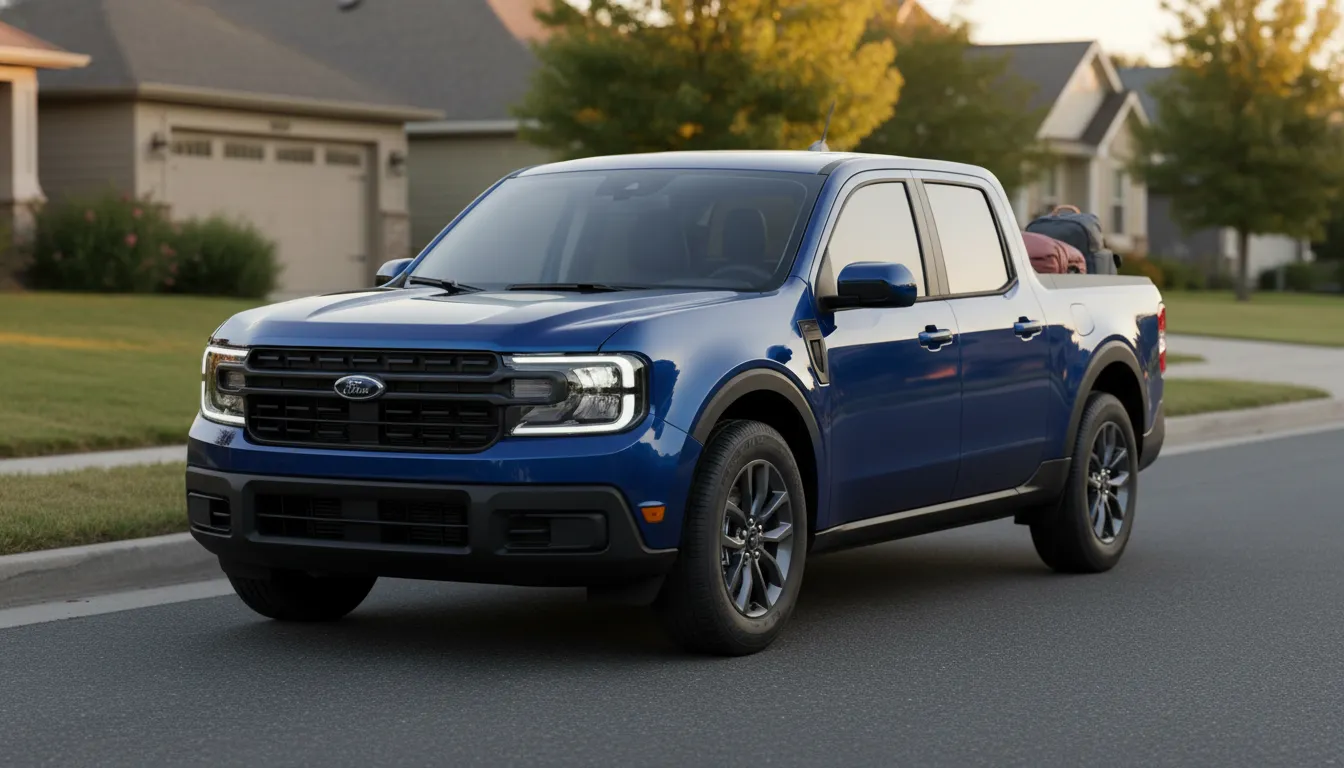
Finding a pickup truck that fits into daily suburban commuting without the steep fuel costs, parking headaches, and bulk of a full-size vehicle is a common challenge. The 2026 Ford Maverick Hybrid XL addresses this balance by offering a compact unibody frame, a 2.5-liter full-hybrid powertrain, and five-passenger seating. This review evaluates how well the entry-level Maverick handles everyday driving, light hauling, and budget priorities. While it delivers impressive fuel efficiency and clever bed utility, its basic cabin materials and configuration-dependent towing capacity require careful consideration.
Quick Verdict
Rating: 8.4/10, recommended with caveats
Best For: Daily commuters, homeowners, and light-duty truck buyers who value fuel economy and easy maneuverability.
Bottom Line: The Maverick Hybrid XL combines strong fuel economy with a genuinely useful 4.5-foot bed and available 4,000-pound towing. Its cabin is basic, and buyers who need frequent heavy hauling or stronger acceleration should compare the EcoBoost or a larger truck.
| Specification | Detail |
|---|---|
| Brand | Ford |
| Model | 2026 Maverick XL |
| Vehicle type | Compact, four-door unibody pickup |
| Powertrain | 2.5-liter full-hybrid system with power-split electronic CVT |
| Combined output | 184 horsepower |
| Drivetrain | Front-wheel drive standard; all-wheel drive available |
| EPA fuel economy | FWD: 42 city/35 highway/38 combined MPG; AWD: 40 city/34 highway/37 combined MPG |
| Fuel tank | 13.8 gallons |
| Standard towing | 2,000 pounds |
| Maximum towing | 4,000 pounds with AWD and the available 4K Tow Package |
| Maximum payload | Up to 1,500 pounds with Hybrid FWD; up to 1,400 pounds with Hybrid AWD |
| Bed | 4 feet 5 inches long; 33.3 cubic feet |
| Wheels and tires | 17-inch steel wheels with 225/65R17 all-season tires |
| Displays | 13.2-inch center display and 8-inch cluster display |
| Seating | Five occupants |
Before You Buy: The 4,000-pound tow rating is not standard. You need an AWD configuration with the available 4K Tow Package, and your actual payload depends on the exact options shown on the driver-door label.
What Is the 2026 Ford Maverick Hybrid XL?
The Maverick XL is the entry trim in Ford’s compact pickup range. It uses unibody construction rather than a separate frame, so it drives and parks more like a compact crossover than a conventional body-on-frame truck.
The standard hybrid setup pairs a 2.5-liter gasoline engine with an electric motor and a power-split electronic CVT. Ford rates the 2026 system at 184 combined horsepower. Front-wheel drive is standard, while all-wheel drive is optional on the XL. That choice matters because the AWD hybrid earns slightly lower fuel economy but can be paired with the available 4K Tow Package.
Who Should Buy It?
Best For
- You need a fuel-efficient commuter that can also carry home-project supplies, bikes, or outdoor gear.
- You want pickup utility but regularly drive in crowded streets, garages, or tight parking lots.
- You tow a small utility trailer, lightweight boat, or compact camper within the truck’s rated limits.
Skip If
- You regularly tow more than 4,000 pounds or carry heavy payloads close to the limit.
- You want strong low-end acceleration or frequent off-road capability.
- You expect a quiet, premium cabin with soft-touch materials throughout.
Exterior Design and Practicality
From the front, the Maverick uses familiar Ford cues, including raised hood edges and C-shaped headlight graphics. The XL trim keeps the presentation functional with a black mesh grille, black exterior handles, unpainted trim, and 17-inch steel wheels with painted covers.
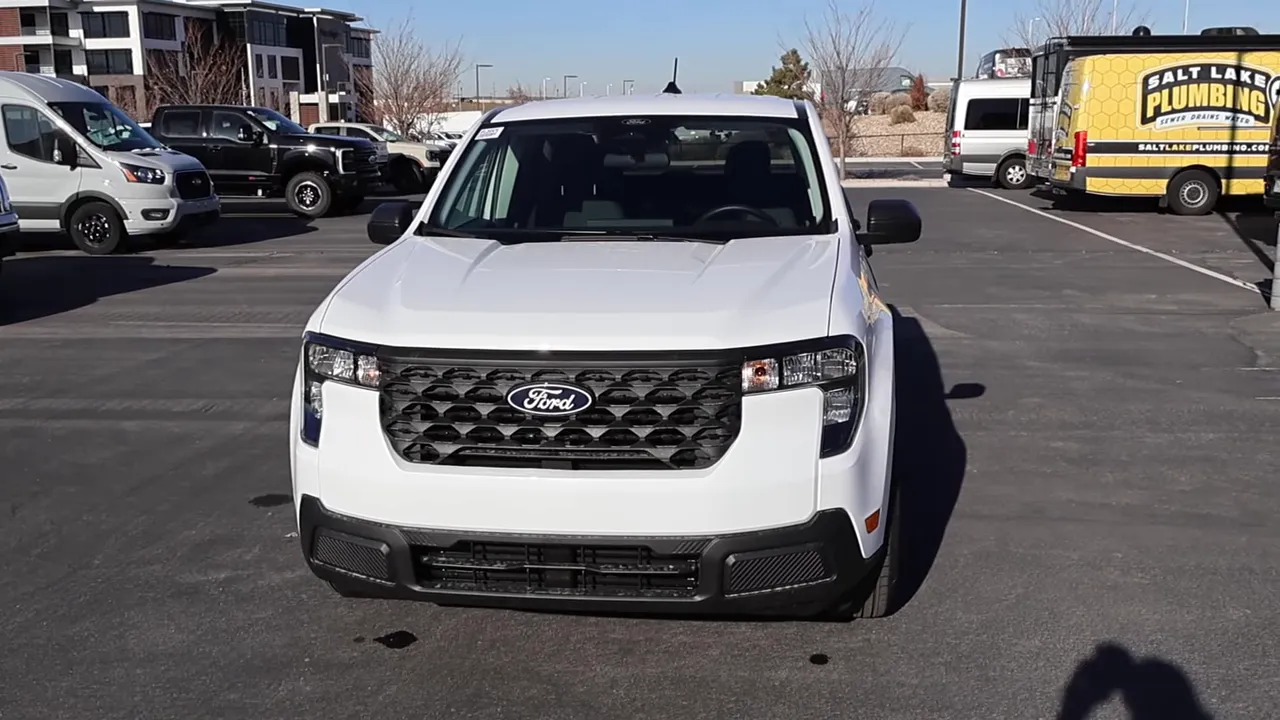
The 225/65R17 all-season tires favor everyday comfort and efficiency rather than an aggressive off-road look. The hybrid’s 8.1 inches of listed ground clearance is useful for rough driveways, snow, and maintained trails, but the XL is still designed mainly for paved-road use.
Bed Size and FLEXBED Utility
The bed measures 4 feet 5 inches long and provides 33.3 cubic feet of cargo volume. It is 42.6 inches wide between the wheel wells and 53.3 inches at its widest point. Six bed tie-downs and two pre-wired 12-volt leads are standard, giving you useful attachment and accessory options without turning the truck into a large work rig.
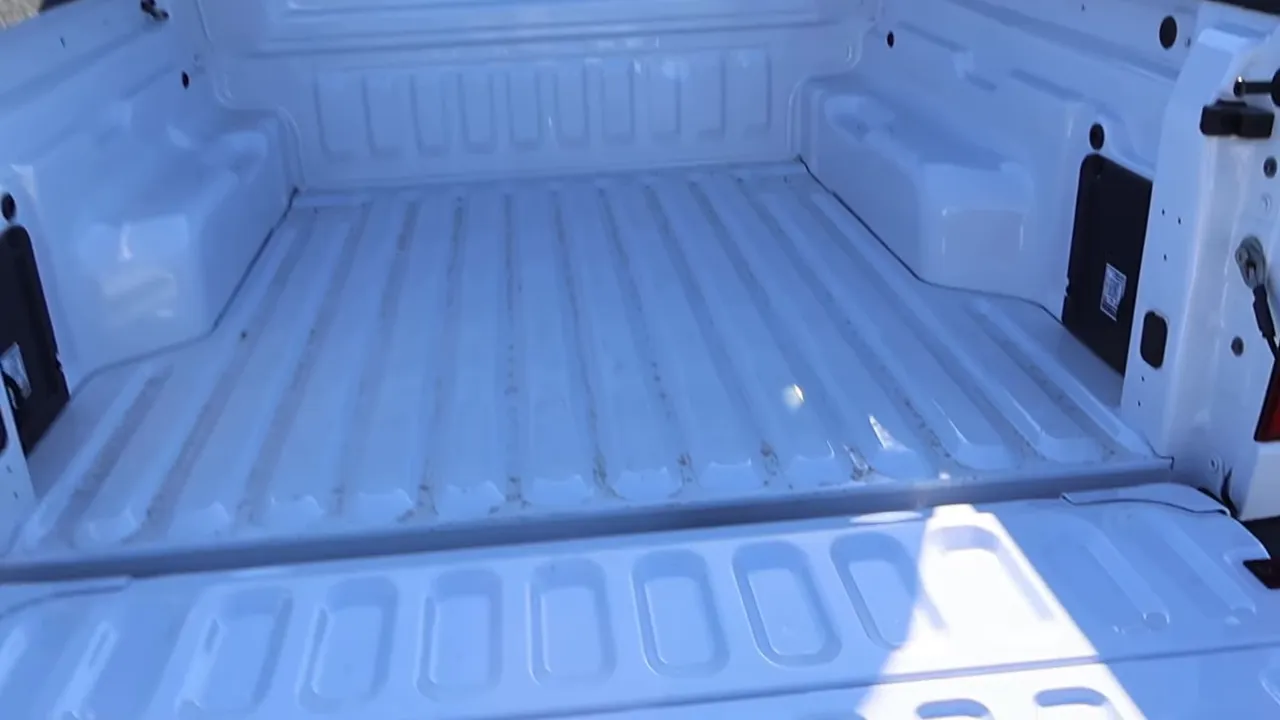
The tailgate on the reviewed XL is light but not dampened, so you should guide it down by hand. A spray-in liner, drop-in liner, bed mat, extender, and locking rail accessories are available if you expect frequent hauling.
Pro Tip: Before loading lumber, landscaping materials, or a trailer tongue, check the yellow payload label on the driver-door jamb. Passengers, accessories, cargo, and tongue weight all count against that specific truck’s payload rating.
Interior and Everyday Usability
Inside the XL, you get durable cloth seats, hard-wearing plastics, and a layout built for easy cleaning. The rear bench offers useful headroom and adult-friendly space for short to moderate trips, although taller passengers may find rear legroom tighter than in a midsize pickup or crossover.

Controls, Displays, and Storage
The 2026 XL includes a 13.2-inch center display with SYNC 4 and an 8-inch cluster display. The screen size gives the cabin a more current feel, while physical climate and audio controls reduce the need to dig through menus for common tasks.
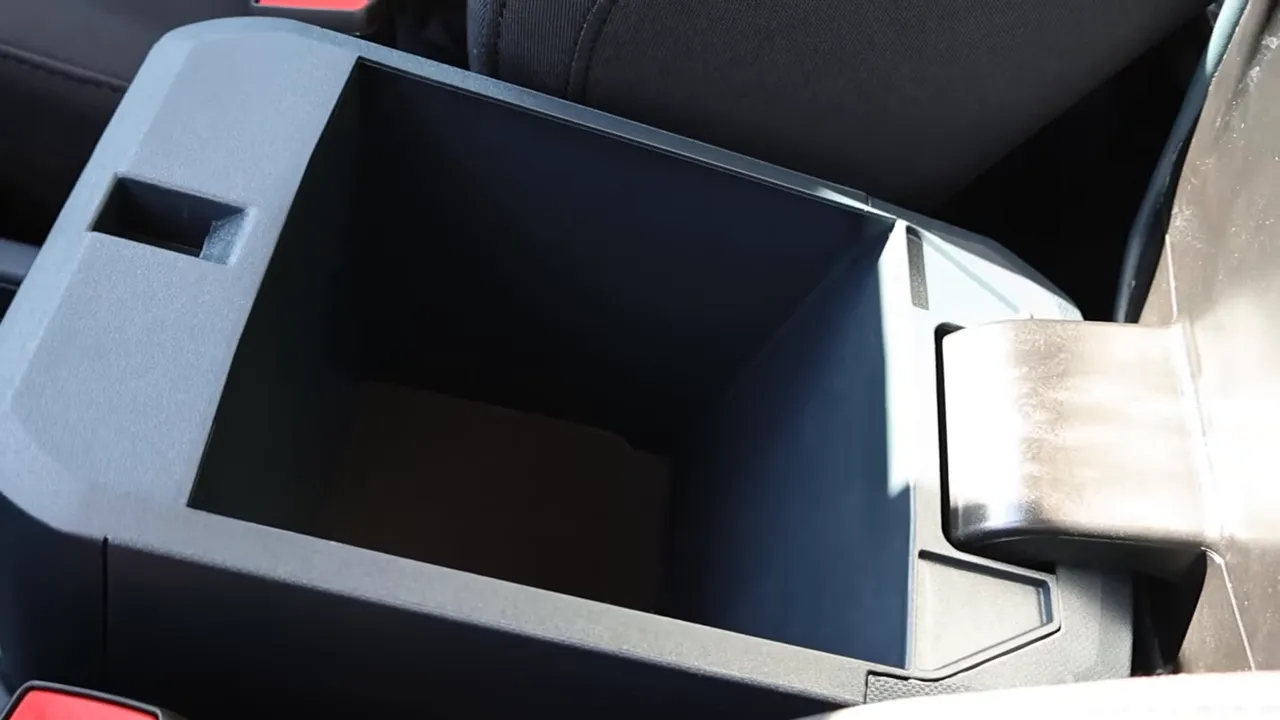
- Rotary shifter: The dial selector frees up center-console space for cups and small-item storage.
- Camera support: The rear camera and available towing aids can make hitch alignment and tight parking easier.
- Useful storage: The console, door pockets, rear under-seat area, and open dash compartments help organize everyday gear.
- Basic-trim tradeoff: The XL’s hard plastics are practical, but they do not provide the richer look or feel of higher trims.
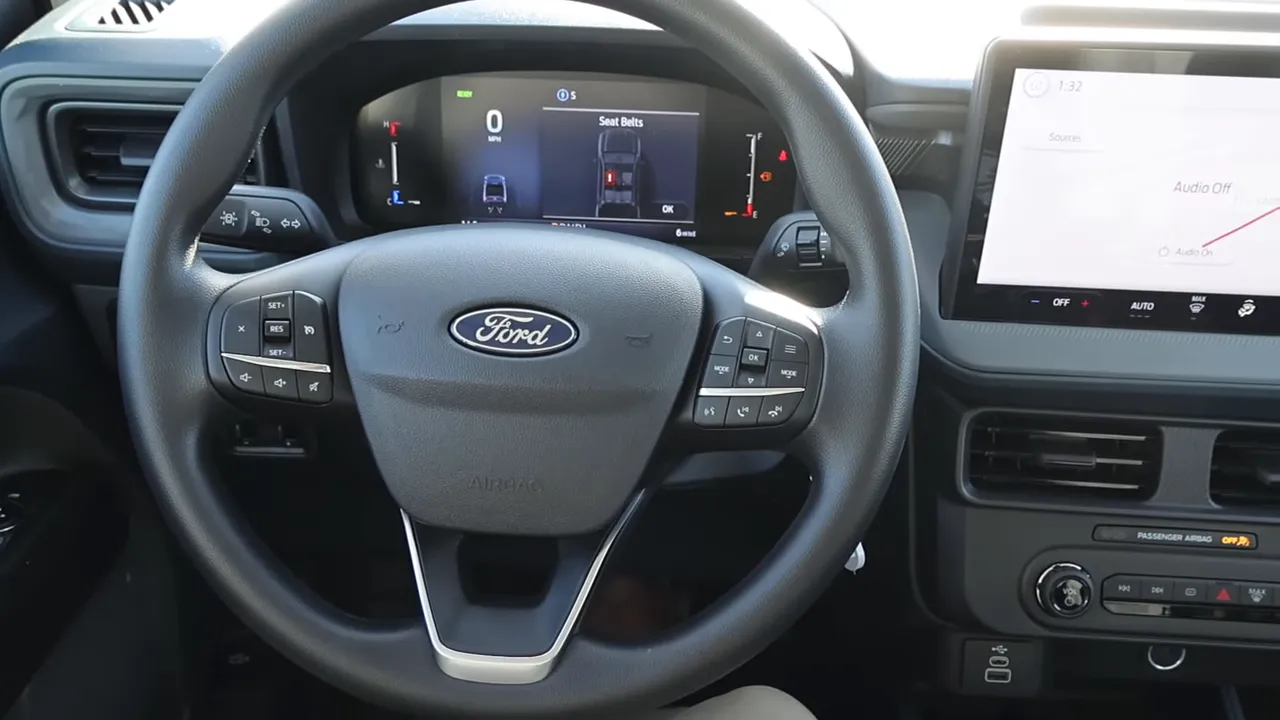
The cabin works best when you value function over luxury. Buttons are easy to identify, the driving position feels familiar, and the compact exterior dimensions do not make the front seats feel cramped.
Powertrain, Fuel Economy, and Driving Feel
The 2026 hybrid system makes 184 combined horsepower and sends power through a power-split electronic CVT. Acceleration is smooth and predictable, especially in city traffic, but the system is tuned for efficiency rather than strong low-rpm punch.

The FWD hybrid is rated at 42 MPG city, 35 highway, and 38 combined. The AWD hybrid is rated at 40 city, 34 highway, and 37 combined. With a 13.8-gallon tank, both configurations can deliver a practical 400-mile-plus driving range when conditions and driving style are favorable.
Ride, Handling, and Noise
The unibody platform and independent front suspension give the Maverick more car-like steering and cornering than a traditional truck. FWD models use a twist-beam rear setup, while AWD models use an independent multi-link rear suspension.
You may hear more tire and impact noise over coarse pavement than you would in a heavier, more insulated pickup. The benefit is easier control in turns, less body motion, and a more relaxed feel during long highway drives.
- Hybrid strength: Quiet low-speed operation and efficient stop-and-go driving.
- Hybrid limitation: More engine sound and slower response when you demand quick acceleration.
- EcoBoost difference: The available EcoBoost engine delivers noticeably stronger acceleration and 250 horsepower, but it uses more fuel.

Towing, Payload, and Safety
Every Maverick starts with a 2,000-pound maximum towing rating. The hybrid can reach 4,000 pounds only when paired with AWD and the available 4K Tow Package. That package includes a Class III 2-inch receiver, 4-pin and 7-pin connectors, a trailer brake controller, and an upgraded cooling fan.
Ford lists maximum payload at 1,500 pounds for the Hybrid FWD and 1,400 pounds for the Hybrid AWD. The reviewed configuration was described at approximately 1,377 pounds, which is plausible for an optioned truck, but you should use the exact door-jamb label rather than a generic brochure number.
Safe Setup Before You Tow
- Confirm the truck has the 4K Tow Package before assuming it can pull 4,000 pounds.
- Include trailer tongue weight, passengers, bed cargo, and accessories in the payload calculation.
- Use the correct hitch ball, safety chains, electrical connector, and trailer brakes when required.
- Stay within the ratings in the owner’s manual and the labels on your specific vehicle.
The Maverick works well for a small utility trailer, lightweight boat, compact camping trailer, or weekend equipment. It is not the right tool for large travel trailers, heavy construction loads, or repeated towing near the maximum rating in demanding terrain.
How It Performs in Real Use
For Daily Commuting
The compact footprint, light steering, and hybrid efficiency make the Maverick easy to use as a primary vehicle. You get pickup-bed flexibility without the turning radius, fuel demand, and parking difficulty of a full-size truck.
For Home Projects
The 4.5-foot bed handles bags of soil, flat-pack furniture, tools, and small appliances well. Longer materials may require the tailgate position, bed extender, and proper tie-downs, so measure your load before leaving the store.
For Weekend Recreation
Bikes, camping equipment, coolers, and fishing gear fit the Maverick’s mission. AWD can add confidence in rain, snow, gravel roads, and slippery boat ramps, but it does not turn the XL into a dedicated off-road truck.
For Small-Trailer Use
The 4K Tow Package meaningfully expands capability for buyers with a small trailer. You still need to manage tongue weight and payload carefully, particularly when the cab is full and the bed is carrying gear.
Common Buying Mistakes to Avoid
- Assuming all hybrids tow 4,000 pounds: Standard hybrid towing is 2,000 pounds. The higher rating requires AWD and the 4K Tow Package.
- Using the maximum payload as a guaranteed number: Options reduce available payload, so the door label is the final reference.
- Choosing AWD without checking MPG: AWD hybrid fuel economy remains strong, but FWD is more efficient.
- Comparing only the base price: AWD, towing equipment, driver-assistance packages, bed protection, and dealer accessories can raise the final price quickly.
- Expecting midsize-truck capability: The Maverick is designed around efficiency and light-duty utility, not maximum towing or off-road work.
Pros and Cons
Pros
- EPA-rated city fuel economy reaches 42 MPG with FWD and 40 MPG with AWD.
- Compact dimensions make parking and daily driving easier than with larger pickups.
- The 4.5-foot bed, tie-downs, and 12-volt leads support useful light-duty work.
- Available AWD and 4K Tow Package expand all-weather and trailer capability.
- The 13.2-inch center display and SYNC 4 add modern connectivity to the base trim.
Cons
- The hybrid feels less responsive than the 250-horsepower EcoBoost under hard acceleration.
- Hard cabin plastics and road noise remind you that the XL is the value-focused trim.
- Useful options can move the final price toward midsize-truck territory.
Is It Worth the Price?
The Maverick Hybrid XL offers its strongest value when you need one vehicle to serve as an efficient commuter and a light-duty pickup. The combination of high city MPG, a usable bed, and optional AWD is difficult to match with a conventional compact car or crossover.
Value becomes less obvious after adding AWD, the 4K Tow Package, driver-assistance options, and bed accessories. At that point, compare the actual window sticker with a Maverick XLT, Hyundai Santa Cruz, Honda Ridgeline, and discounted midsize pickups. The XL remains a smart buy when efficiency and compact size matter more than premium cabin materials or maximum capability.
How It Compares to Alternatives
The Hyundai Santa Cruz offers stronger available turbo performance and a more crossover-like interior, but its most efficient versions do not match the Maverick Hybrid’s fuel economy. The Honda Ridgeline provides more cabin space, a larger feel, and stronger standard capability, but it costs more and uses more fuel.
Within the Maverick lineup, the EcoBoost is the better choice when you prioritize acceleration, higher-speed passing, or repeated towing. The hybrid makes more sense when most of your driving is commuting, errands, and light hauling.
Frequently Asked Questions
How much horsepower does the 2026 Maverick Hybrid make?
Ford rates the 2026 2.5-liter hybrid system at 184 combined horsepower. The gasoline engine’s standalone output is lower, so use the combined figure when comparing the complete hybrid powertrain.
What fuel economy does the Hybrid XL get?
The FWD hybrid is rated at 42 city, 35 highway, and 38 combined MPG. The AWD hybrid is rated at 40 city, 34 highway, and 37 combined MPG, with actual mileage depending on weather, speed, load, and driving habits.
Can every Maverick Hybrid tow 4,000 pounds?
No. Standard maximum towing is 2,000 pounds. The 4,000-pound rating requires AWD and the available 4K Tow Package, plus correct loading and towing equipment.
How much payload can the hybrid carry?
Ford lists up to 1,500 pounds for Hybrid FWD and up to 1,400 pounds for Hybrid AWD. Your truck’s actual rating may be lower after factory and dealer-installed options, so check the driver-door label.
Is the Maverick a body-on-frame truck?
No. It uses unibody construction, which helps it feel stable, maneuverable, and car-like on pavement. The tradeoff is less heavy-duty capability than a traditional body-on-frame pickup.
How large is the Maverick’s bed?
The bed is 4 feet 5 inches long and holds 33.3 cubic feet. It measures 42.6 inches between the wheel wells, which helps with planning for boxes, tools, bikes, and building materials.
Is the Hybrid XL better than the EcoBoost?
The hybrid is better for fuel economy, smooth city driving, and commuting. The 250-horsepower EcoBoost is better when you want stronger acceleration, more confident passing power, or a powertrain that feels less strained under load.
Who should skip the Maverick Hybrid XL?
Skip it if you regularly tow heavy trailers, need a long bed, carry high payloads, or expect premium cabin materials. A midsize or full-size truck will be a better fit for demanding work.
The Bottom Line
The 2026 Ford Maverick Hybrid XL is a strong choice for buyers who want excellent fuel economy, simple truck utility, and an easy-to-drive footprint. Choose it for commuting, home projects, and light recreation, but consider the EcoBoost or a larger pickup if acceleration, payload, or heavy towing matters more than MPG.
Its biggest strength is how naturally it fits into everyday life. Its main limitation is that useful capability packages and options can raise the cost while the XL cabin remains basic.



[…] vehicle options include Ford, Toyota, Chevrolet, Chrysler, Nissan, Hyundai, and Kia models. You still need to confirm the […]